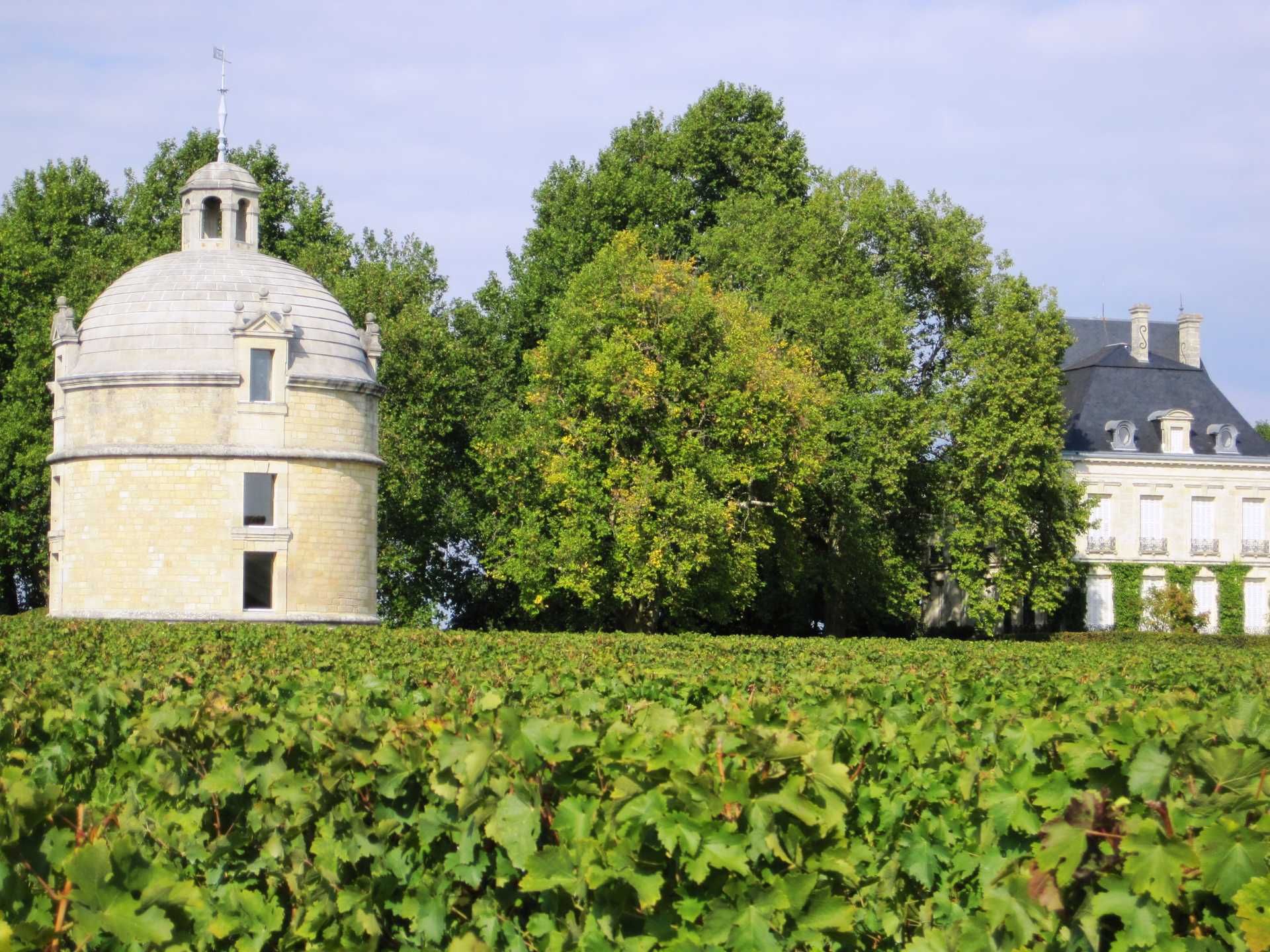
Château Latour, a Premier Grand Cru Classé of Pauillac since 1855, embodies a style defined by rigor within the Médoc landscape. The first documented mention of this estate dates back to 1331, when Gaucelme de Castillon erected the "Tour de Saint-Maubert." In the midst of the Hundred Years' War, this structure had no viticultural purpose; it served as a fortress to monitor and guard the Gironde estuary. The original tower was replaced in the 17th century by the circular tower we know today, which was built using stones from the former fortification.
The lordship of Latour only became a wine-growing estate in the 17th century under the guidance of the Ségur family. Nicolas-Alexandre de Ségur, President of the Parliament of Bordeaux and nicknamed the "Prince of Vines" by Louis XV, acquired the most prestigious estates in the Médoc. Under his influence, Latour began to gain an international reputation. By the middle of the 18th century, the quality of its wine was such that its sale price was twenty times higher than that of a common Bordeaux wine. This price inflation already foreshadowed its accession to the rank of 1st Grand Cru Classé in 1855.
Managed by the descendants of the Ségur family until 1962, Château Latour experienced a major renewal when it was purchased that same year by British interests. The Pearson and Allied Lyons groups (formerly Harvey’s of Bristol) acquired the majority of the shares and modernized the estate.
In 1993, the château returned to French ownership when François Pinault, via his holding company Artémis, bought the shares from Allied Lyons. Under the direction of Frédéric Engerer, appointed manager in 1995 and later president, the estate began a new phase of its transformation.
The greatness of Latour's wine rests on the 47 hectares of the l'Enclos vineyard planted with old vines (some a century old). The terroir of L’Enclos is situated on gravelly ridges that overlook the Gironde estuary at an altitude of 12 to 16 meters. These soils are composed of ancient gravel from the Günz era, characterized by a mixture of pebbles and siliceous gravel deposited by the floods of the Garonne less than two million years ago. These layers of gravel, the thickness of which can vary considerably, rest on a subsoil of marly and clayey sediments.
The gravel allows rainwater to infiltrate quickly, avoiding stagnant humidity detrimental to the quality of the berries. Water regulation: The underlying clay layers act like a sponge, retaining water and nutrients. During periods of summer drought, the vine's root system, forced to dive deep for sustenance, can draw from these reserves.
In the 19th century, a sophisticated drainage network made of pottery drains was installed throughout l'Enclos to evacuate excess water before the harvest, thus guaranteeing optimal concentration even during wet vintages.
The immediate proximity of the Gironde is a decisive climatic factor. This immense body of water tempers temperature variations: it brings relative coolness in summer, delaying the scorching of the berries, and above all, it protects the vineyard from devastating spring frosts. This role as a thermal regulator allows for earlier and more homogeneous ripening, which is often decisive during unpredictable autumns.
Since 2008, under the impetus of François Pinault and the technical team led by Frédéric Engerer and Hélène Génin, the estate has begun a transformation toward environmentally friendly farming practices. Latour is the first of the Médoc Premier Grands Crus to have undertaken a conversion to organic agriculture.
Château Latour does not limit itself to organic requirements; it deploys biodynamic techniques across the entirety of l'Enclos to strengthen the vine's natural defenses and the vitality of the soil. Approximately ten horses are used to plow the plots, thus avoiding the soil compaction caused by the weight of tractors. This method promotes the porosity and respiration of the earth, essential elements for the development of a healthy microbiome that nourishes the vine deeply.
The harvest is exclusively manual, followed by a rigorous double sorting. The first sorting eliminates plant debris and imperfect berries, while the second sorting, after destemming, refines the selection to keep only the grapes of optimal maturity. The grapes are then transported by gravity into temperature-controlled stainless steel vats.
The estate has a modern vat room where each vat is dedicated to a specific plot or a selection of young vines. Alcoholic fermentation is followed by a maceration of about three weeks, allowing for a gentle but deep extraction of tannins and color. Once drained, the wines undergo malolactic fermentation before beginning their aging.
The aging process is adapted to each cuvée, but the Grand Vin systematically benefits from 18 to 20 months in 100% new French oak barrels. The choice of wood, coming mainly from the forests of Allier and Nièvre, is crucial for providing structure and aromatic nuances (notes of cedar, graphite) without masking the purity of the fruit.
Château Latour produces three red wines:
The Grand Vin de Château Latour (Premier Grand Cru Classé) Produced exclusively from the old vines of l’Enclos (average age of 60 years), this wine is the ultimate expression of the property. Dominated by more than 90% Cabernet Sauvignon, it is distinguished by its monumental concentration, firm tannic structure, and immense aging potential. In great vintages, it can evolve favorably for several decades, developing a bouquet of rare complexity blending black fruits, undergrowth, and minerality.
Les Forts de Latour Created in 1966, this wine comes from plots located on the perimeter of l’Enclos and from properties acquired over time (Petit Batailley, Pinada, Sainte-Anne). Although described as a "second wine," it possesses the stature of a Médoc Grand Cru Classé. Its blend contains a larger proportion of Merlot (25 to 30%) and its aging is conducted in 50 to 60% new wood. Distinguished and ultra-typical of Pauillac, Les Forts de Latour is a model of its appellation.
Le Pauillac de Château Latour Appearing regularly since 1990, this wine is mainly crafted from the young vines of Les Forts as well as vineyards located on the periphery of Pauillac. With approximately 45% Merlot and aging in barrels of which only 20% are new, it offers an elegant and accessible introduction to the house style.
In 2012, Château Latour caused a seismic shift in the wine market by announcing its exit from the "en primeur" sales system. This bold decision, taken by François Pinault and Frédéric Engerer, aimed to regain control over the wine's life cycle and to guarantee the final consumer bottles that are ready to be enjoyed.
Henceforth, the estate keeps its stocks in its own cellars until the wines reach a maturity deemed satisfactory. The aging periods before market release are approximately 4 to 6 years for Le Pauillac de Latour, 6 to 8 years for Les Forts de Latour, and 8 to 10 years for the Grand Vin.
Château Latour remains a model of consistency and prestige in the world of Bordeaux Grands Crus. By relying on a terroir of rare geological complexity, protected by the regulatory influence of the Gironde, the estate has successfully moved through the centuries while maintaining an absolute level of excellence. The transition to organic agriculture and biodynamics, far from being a simple trend, is part of a deep-seated desire to preserve this heritage for future generations while refining the purity of the terroir's expression.