While the Baillette family has been cultivating vines for four generations, Pierre Baillette champagnes are a recent creation, founded fifty years ago by the father of the current owner. The history of the estate is rooted in the premier cru village of Trois-Puits (Montagne de Reims). The 3.65-hectare property established itself through the quality of its production under the leadership of Périne Baillette, who took the reins in 2010. The winemaker brought her renewed vision of champagne, nourished by an ecological conscience. Périne is part of a generation of winemakers who prioritize agronomic work and soil life as the foundations of wine quality.
Upon taking office, Périne banned the use of synthetic herbicides and pesticides and committed the estate to a conversion toward organic practices. To combat soil compaction, the estate reintroduced horse-drawn plowing. In winter, cover crops consisting of oats, barley, mustard, and wheat are sown between the rows. These plants provide essential organic matter (humus) that nourishes the vines naturally. The Trois-Puits terroir is distinguished by the shallowness of its soils. In some plots, such as those used for the Coeur de Craie cuvée, the layer of topsoil does not exceed 15 centimeters before reaching the chalky bedrock.
To the west of Trois-Puits, the estate manages about one hectare in the famous village of Rilly-la-Montagne. The wines from Rilly, including the pinot noir from the Malachets plot (from old vines), present a broader texture while maintaining the underlying mineral framework. Finally, the estate manages a 0.28-hectare plot named Le Pertois located in Verzenay, a Grand Cru village renowned for its powerful pinot noirs.
Quality begins at the press. The estate exclusively uses the cuvée (the first, purest, and most acidic juices) for the production of its wines. The tailles (end-of-press juices) are systematically discarded or sold. Aging is largely done in oak. The estate uses barrels of 2 to 4 wines to vinify and age its single-plot cuvées. This controlled micro-oxygenation rounds off the sharp vivacity of the chalk without marking the wine with dominant woody aromas.
The wines benefit from prolonged aging on the lees, ranging from 3 to 6 years depending on the cuvée, allowing for complete autolysis and the development of tertiary aromas (brioche, almond). At disgorgement, the dosage is minimalist, generally classifying the wines as extra-brut (between 1 and 3.5 g/L of sugar) or even brut nature. This choice requires an impeccable quality of the base wine. Riddling is always performed manually on wooden racks, perpetuating an ancestral gesture.
The Le Village Premier Cru cuvée is the estate's calling card, sourced exclusively from the Trois-Puits terroir. The blend varies but is built around the three grape varieties, often with 40% chardonnay, 40% pinot noir, and 20% pinot meunier.
Coeur de Craie de Trois-Puits: Sourced from the lieu-dit Les Chauds Champs, this is the finest in the range. Despite the pinot noir grape variety, it possesses the precision of a chardonnay due to the thinness of the soil (15cm). It is a crystalline and vertical wine.
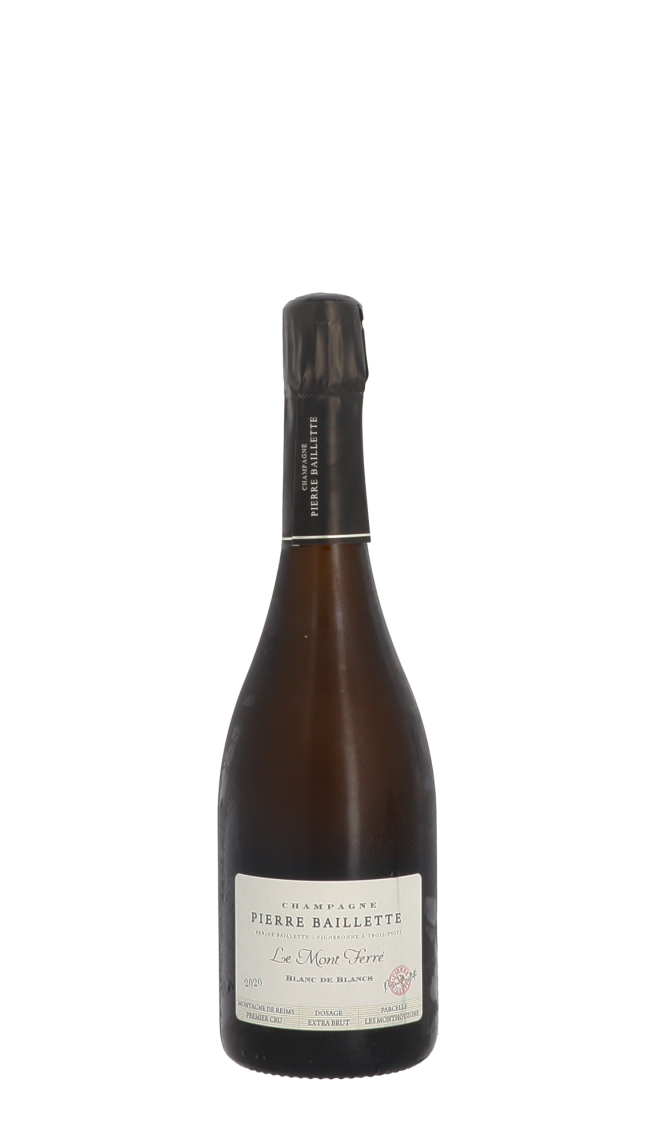
Through her single-plot vinifications, Périne Baillette offers a moving interpretation of the Montagne de Reims. From the Le Village cuvée and her Le Mont Ferre Premier Cru to the Coeur de Craie cuvées (Rilly-la-Montagne, Verzenay), her wines of place make the geological specificities of Campanian chalk intelligible through tasting.